
ADA Bathroom Remodeling
Bathrooms Built for Safe, Independent Daily Use
ADA Bathroom Remodeling in Somerville for mobility limitations and aging-in-place needs
Inside & Out Home Improvement handles ADA bathroom remodeling in Somerville with attention to compliance standards that directly affect daily safety and independence. When mobility becomes a concern or balance issues make standard bathrooms difficult to navigate, structural changes to doorway width, fixture height, and floor transitions remove physical barriers that limit access. The work focuses on creating spaces where individuals using wheelchairs, walkers, or other mobility aids can move freely without assistance.
This service involves replacing standard tubs with walk-in tubs or barrier-free showers that eliminate the need to step over high thresholds, installing grab bars at specific heights and locations based on transfer points, widening doorways to meet minimum clearance requirements for wheelchair access, and repositioning sinks and toilets to allow for forward or side approach. Each modification addresses a specific physical limitation that standard bathroom layouts create for people with reduced mobility.
Schedule an in-home assessment to evaluate current barriers and discuss compliance requirements for your specific mobility needs.
What Proper ADA Compliance Requires
ADA bathroom remodeling follows dimensional standards that determine whether someone can physically access and use fixtures independently. Grab bars must be anchored into solid blocking installed during framing, not simply fastened to drywall, because they need to support significant weight during transfers. Walk-in tubs require precise plumbing adjustments to accommodate door seals and ensure proper drainage without creating new threshold barriers at the entry point.
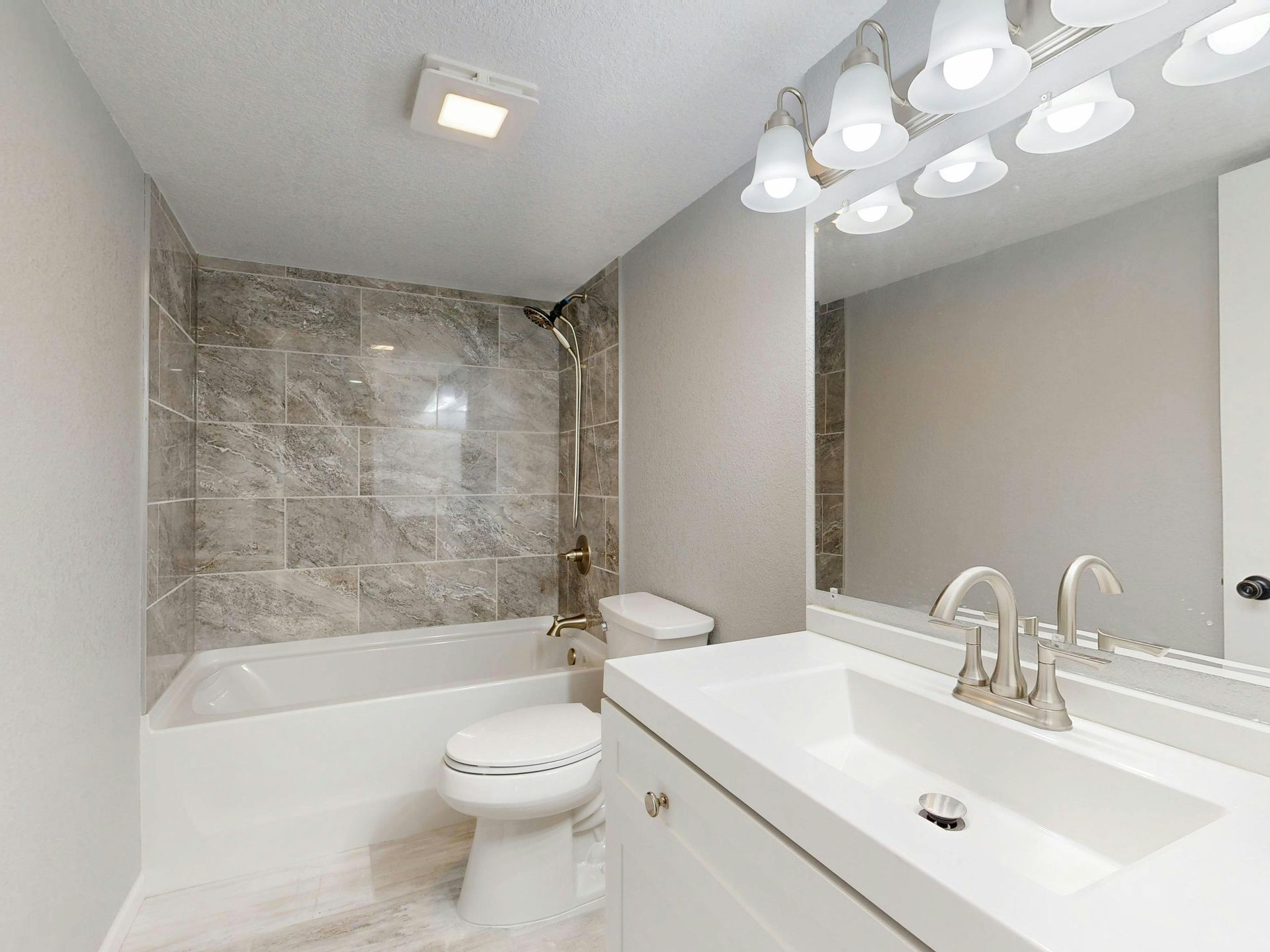
After the remodel, you'll notice doorways wide enough to maneuver a wheelchair without scraping knuckles or door frames, shower entries you can roll or walk into without lifting your feet, and grab bars positioned where you actually reach during transfers rather than where they look decorative. Sinks sit at heights that allow knee clearance underneath for forward approach, and toilet placement provides adequate side transfer space. These changes mean daily tasks like bathing and using the toilet no longer require assistance or create fall risks.
The scope includes structural work like framing adjustments for wider doors, reinforcement for grab bar mounting, and sometimes subfloor modifications to achieve zero-threshold shower entries. Surface finishes use slip-resistant materials, and all hardware meets reach range requirements. Projects vary based on whether you're adapting an existing bathroom or building accessibility into a new layout.
Questions About ADA Bathroom Modifications
Homeowners in Somerville often ask about specific compliance requirements and how modifications affect bathroom functionality for all household members.
- What makes a shower truly barrier-free? A barrier-free shower has a flush or nearly flush entry with the bathroom floor, typically achieved by recessing the shower pan into the subfloor or using a gradual slope, and includes a linear drain positioned to handle water flow without creating a lip or threshold that impedes wheelchair access.
- How are grab bar locations determined? Grab bar placement depends on the user's specific transfer method, whether they approach from the side, front, or at an angle, and must be positioned within reach ranges defined by ADA standards while anchored into blocking that can support at least 250 pounds of force.
- Why do ADA bathrooms require wider doorways? Standard residential doorways measure 24 to 28 inches clear width, but wheelchairs and walkers require at least 32 inches of clear passage, which usually means installing a 36-inch door and sometimes widening the rough opening in the wall framing.
- Can accessible design work in small bathrooms? Compliance is possible in smaller spaces by repositioning fixtures to maximize turning radius, using wall-hung sinks to create knee clearance, and choosing compact walk-in showers with corner entry, though some layouts may require expanding into adjacent spaces.
- What maintenance do walk-in tubs require? Walk-in tubs need regular seal inspection around the entry door to prevent leaks, and users should run a cleaning cycle or flush the jet system monthly if hydrotherapy features are installed, since water retained in lines can develop buildup over time.
Inside & Out Home Improvement designs accessible bathrooms that meet both regulatory requirements and your household's specific mobility needs. Request a consultation to review your current layout and discuss modifications that will support safe, independent use.