
Kitchen Flooring
Surfaces Built for Constant Foot Traffic
Kitchen Flooring in Somerville for worn surfaces and water-damaged boards near sinks
Kitchen floors take more abuse than any other surface in your home because of the combination of dropped utensils, spilled liquids, and constant foot traffic concentrated in the work triangle between your sink, stove, and refrigerator. Inside & Out Home Improvement installs tile, vinyl, hardwood, laminate, and durable flooring options in Somerville designed to handle the impact and moisture exposure that comes with daily cooking and cleanup. This work addresses floors where vinyl has torn at seams, hardwood boards have cupped from repeated water exposure, or tile grout has cracked and allows moisture to seep into the subfloor.
Installation involves removing existing flooring down to the subfloor, checking that the subfloor is level and structurally sound, laying underlayment if required for moisture protection or sound dampening, and installing the new flooring with appropriate expansion gaps at walls and transitions. The process fixes floors that feel spongy underfoot near the dishwasher, show visible wear patterns in front of the sink, or have developed an uneven surface that causes cabinet doors to swing open or closed on their own.
Arrange an evaluation to assess your current subfloor condition and discuss material options.
The Difference Between Kitchen Flooring Materials
Tile installation requires thinset mortar spread over a completely flat subfloor because any dips or humps will telegraph through and cause tiles to crack under load, while vinyl plank flooring floats over minor imperfections using a click-lock system that doesn't require adhesive. Hardwood needs acclimation time in your home before installation so the boards adjust to local humidity levels and won't shrink or expand excessively after they're nailed down.
You'll notice new flooring sits level without dips that collect standing water, seams between planks or tiles align tightly without gaps where crumbs get trapped, and the surface underfoot feels solid rather than flexing when you walk across it. Floors installed properly don't develop squeaks when you step in the same spots repeatedly, and water from spills stays on the surface long enough to wipe up before seeping into seams.
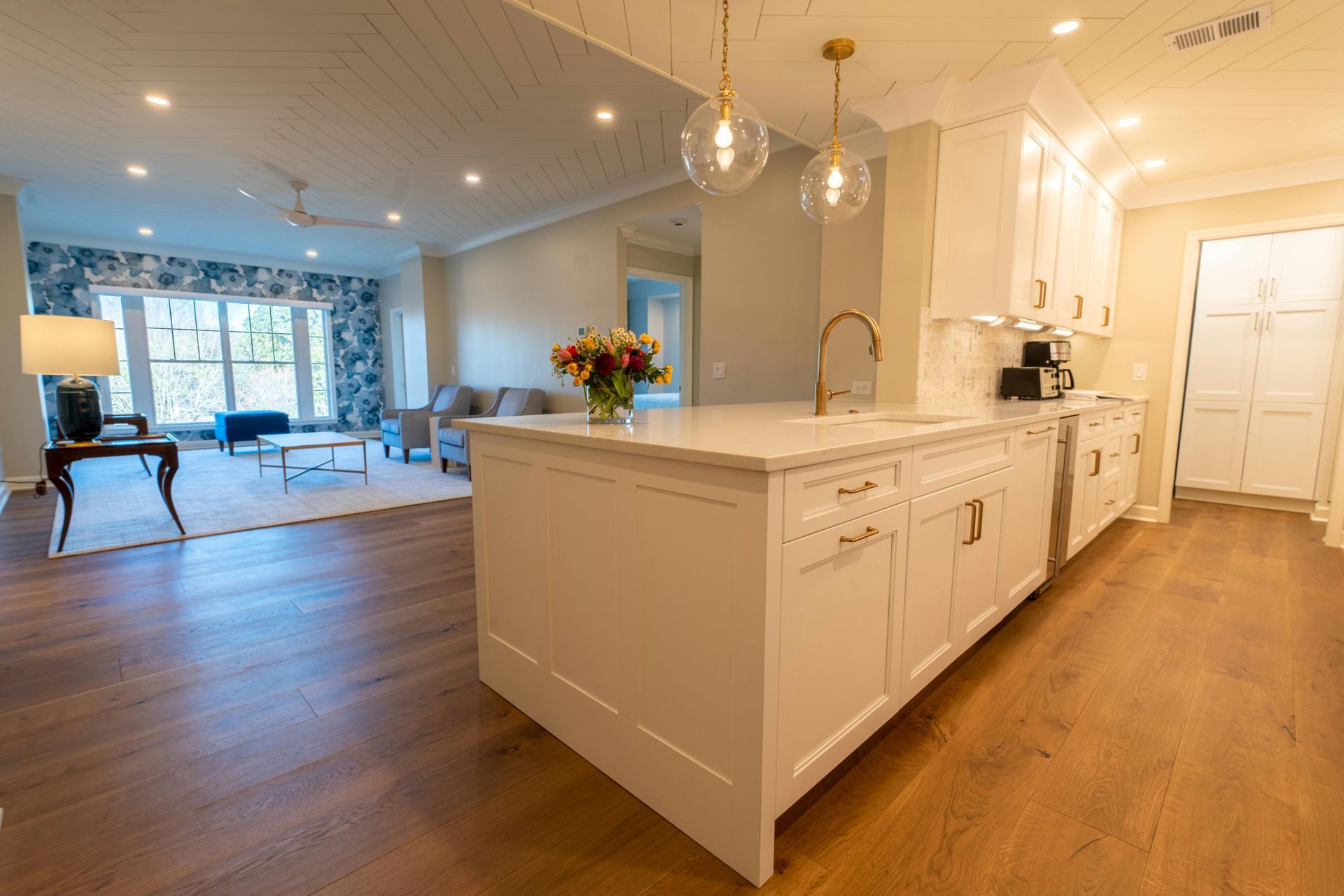
Material choice affects both durability and maintenance requirements, with porcelain tile offering the best water resistance but feeling harder underfoot than vinyl or laminate, and engineered hardwood providing the appearance of solid wood with better dimensional stability in kitchens where humidity fluctuates. Luxury vinyl plank mimics wood grain convincingly and installs over existing floors in some cases, eliminating demolition time and reducing overall project disruption.
What Property Owners Usually Ask
Flooring decisions for Somerville kitchens involve questions about material performance, installation requirements, and what actually holds up under daily use.
- What flooring material handles spills best without long-term damage? Porcelain tile is completely waterproof and won't swell or warp even if water sits for hours, while laminate has a wood fiber core that swells if moisture penetrates the seams, and solid hardwood can cup or crown if repeatedly soaked.
- How does subfloor condition affect which flooring you can install? Tile and stone need a subfloor rated for the additional weight and stiff enough to prevent flexing that cracks grout, while floating floors like vinyl plank can go over slightly uneven subfloors as long as dips don't exceed manufacturer specifications.
- Why do some wood floors fail near kitchen sinks and dishwashers? Wood expands when it absorbs moisture and contracts when it dries out, and repeated cycles cause boards to cup at the edges or pull apart at seams, which is why engineered hardwood with a waterproof core performs better in moisture-prone areas.
- What's the advantage of larger format tiles in kitchen installations? Fewer grout lines mean less maintenance and fewer seams where water can penetrate, but large tiles require a flatter subfloor because any deviation becomes more noticeable across a bigger surface.
- When should underlayment be added during kitchen flooring installation? Underlayment provides moisture protection over concrete subfloors, adds cushioning under hard tile or stone, and helps level minor subfloor irregularities so floating floors don't develop gaps at the joints.
Inside & Out Home Improvement inspects your existing subfloor for soft spots or water damage that needs repair before new flooring goes down, and selects installation methods appropriate for your kitchen's layout and daily use patterns. Set up a flooring review to see material samples and get a timeline based on your current floor condition and whether subfloor repairs are needed first.